
By Sanne Molenaar
Since Patrice Talon was elected President of Benin Republic in 2016, he has massively invested in the cultural sector. The restitution of cultural treasures from France, the construction of museums, the revalorization of cultural heritage, and the development of ‘memorial tourism’, have led to a veritable cultural boom. Based on my research, the aim is to create international recognition and agency for the country through the cultural sector, and negotiate political and economic partnerships.
According to Talon, the cultural sector should not just be developed for its own sake, but should foremostly lead to economic profit.[i] One aspect of this is the revalorization of the heritage of the Transatlantic slavery. The slavery route in Ouidah, a town in south-western Benin, has been rehabilitated, the Portuguese fort is under reconstruction and will be transformed into a Slavery Museum, and nineteenth-century Afro-Brazilian houses are being renovated. These investments, as well as the marketing campaigns around it, have turned Benin into a popular destination for African-Americans and other diasporas, who are looking for their origins. While the country received 325 000 tourists in 2020, it aims to receive 2 million tourists in 2030.[ii] Its raising popularity enables the country to compete economically with other West African countries, such as Ghana and Senegal, who also invest largely in the cultural heritage of slavery.
Despite the economic benefits, Talon’s cultural politics only scarcely acknowledges Beninese scholarly knowledge nor does it recognize the needs and interests of the local people who are concerned. By this, I mean the people whose ancestors were reduced into slavery, or were slave merchants from Brazil and Western European countries. This short article, resulting from field research in Southern Benin from 2020-2025, explains the underlying reasons as well as the aims and disadvantages of the cultural policies related to the heritage of the Transatlantic slavery, while focusing on belonging, ownership and authenticity, and aiming to propose a more inclusive and ethical cultural politics.
Benin’s contested relationship with the slavery heritage
Global discussions about the legacy and reparations of slavery often concern mainly Western European countries; those who are often considered as the main actors, or perpetrators, of the Transatlantic slave trade.[iii] [iv] In Benin, though, reparations for slavery do not only concern Western Europe, but the own country in the first place. In the eighteenth and nineteenth centuries, many Brazilian and European slave merchants got installed on the West African coast and married African women.[v] They collaborated with the Dahomean kings, some of whom would exchange war captives for goods. Until today, according to some of my informants, the descendants of the Dahomeans are accused by the population of having had an active role in the slave trade. This is also the case for the descendants of the slave merchants, who are of mixed origins but have nowadays integrated into the Beninese society. President Talon himself is concerned as well, as he descends from Pierre Manoël Titi Talon, who was a French administrator who directed the Slavery Fort of Ouidah at the end of the nineteenth century. Thirdly, liberated Africans moved from Brazil to the West African coast, amongst which the contemporary Benin, in the first half of the nineteenth century, and many of these people also got engaged in the slave trade on their arrival. The descendants of many of these people continue to be accused of having sold their brothers and sisters, and play an ambiguous role in society, according to my research.
Public apologies of European governments and recent global initiatives amongst which the construction of slavery museums, as well as scholarly discussions[vi], have given the Beninese government the urge to revalorize and restructure the country’s slavery heritage. The government has a feeling of discomfort, because of the country’s historical involvement with the slave trade. Revalorizing this heritage is a way to come to terms with the past, to diminish the stigma of the legacy of slavery, to raise awareness, and to manage and negotiate the national image.
At the same time, it is a form of soft power. [vii] [viii] Economic growth is generated through attraction, which is created by the country’s national branding. By acknowledging the past, a positive and responsible image of the country is created, which acts as cultural diplomacy. Benin has been turned into a popular tourist destination, especially for African Americans; people whose ancestors had been reduced into slavery. Benin’s rising popularity amongst tourists has important economic benefits. According to Ecofin Agency,[ix] Benin has approved a $1.4 billion strategic plan to develop its tourism, culture, and arts sectors over the 2025–2029 period, after having already invested $2 billion in recent years. The aim is to increase the tourism sector’s contribution to GDP from 6% to 13.4% by 2030.
Neglecting Local Knowledge: Scholars and Communities Ignored
An example of one of the cultural projects that have been initiated by the Beninese government is the Slavery Route in Ouidah. The route, which has a length of approximately four kilometers, starts at the center of Ouidah and ends on the beach. While the route was formerly a sand path, it has now been asphalted and made more accessible, as parts of the route formerly flooded during the rainy season. Nevertheless, Beninese archaeologists who aimed to do excavations on the route to contribute to the historical knowledge of the region, have been blocked by the rehabilitation works. Beninese anthropologists with whom I collaborate also question how this affects the authenticity of the route. The idea of suffering, which could formerly be felt while walking on the sand and, during the rainy season, through the water, has disappeared and is now replaced by cars and buses with tourists.[x] The heritage is being commodified and serves as a tourist attraction.[xi]
Another example is the Marina project: the construction of a ‘Boat of Departure’ on the coast of Ouidah.[xii] This place, which is considered as a key element of Beninese memorial tourism according to the Ministry of Culture and Tourism, aims to embody the suffering of the Africans.[xiii] When the construction will be finished, people will be able to visit the boat and hear the sounds of people who are suffering. They will also see hyperrealist bodies made of wax, representing the enslaved Africans who were attached on the boat. The main objective of this project is to make people experience what the enslaved people would have gone through, comparable with memorial sites of the Second World War such as the Auschwitz concentration camp in Poland, and the memorial sites of the Apartheid on Robben Island in South Africa, creating a global recognition. The project aims to distinguish Benin from other West African countries such as Ghana and Senegal, who also invest largely in the heritage of slavery, and makes the country even more attractive for tourism.
Nevertheless, many Beninese people, especially those who descend from enslaved people or slave merchants, do not agree. According to the interviews I did with people from different families who feel concerned, especially the descendants of liberated returnees from Brazil, the heritage of slavery, which formerly belonged to them, is now owned by the state. Their history has been institutionalized and they cannot tell their own story anymore. As a result, they prefer to disengage from the public heritage of slavery, such as the memorial sites mentioned above, and prefer to hold onto their personal heritage. By this, I mean their house – many live in houses that were constructed in the nineteenth and early twentieth century – as well as family portraits, furniture, other objects, and family ceremonies.
Restorations Without Authenticity: Architectural and Symbolic Dispossession
Unfortunately, similar issues occur with these personal heritages. In Porto-Novo, the capital of Benin, several nineteenth- and twentieth-century houses that are inhabited by these people, have been restored by the Municipal Government in collaboration with the African School of Heritage (Ecole du Patrimoine Africain). These constructions were in a bad state and might have collapsed if they would not have been rehabilitated. Although the inhabitants were in a first instance glad their houses would be preserved, some of them now regret to have accepted. The owners of the houses have had to move and the government has transformed some of the houses into hotels, of which the families do not benefit the way they expected. Though not officially, for them it feels like they do no longer own their own houses. Similarly to the public heritage of slavery, their heritage is being commodified to accommodate for tourism.
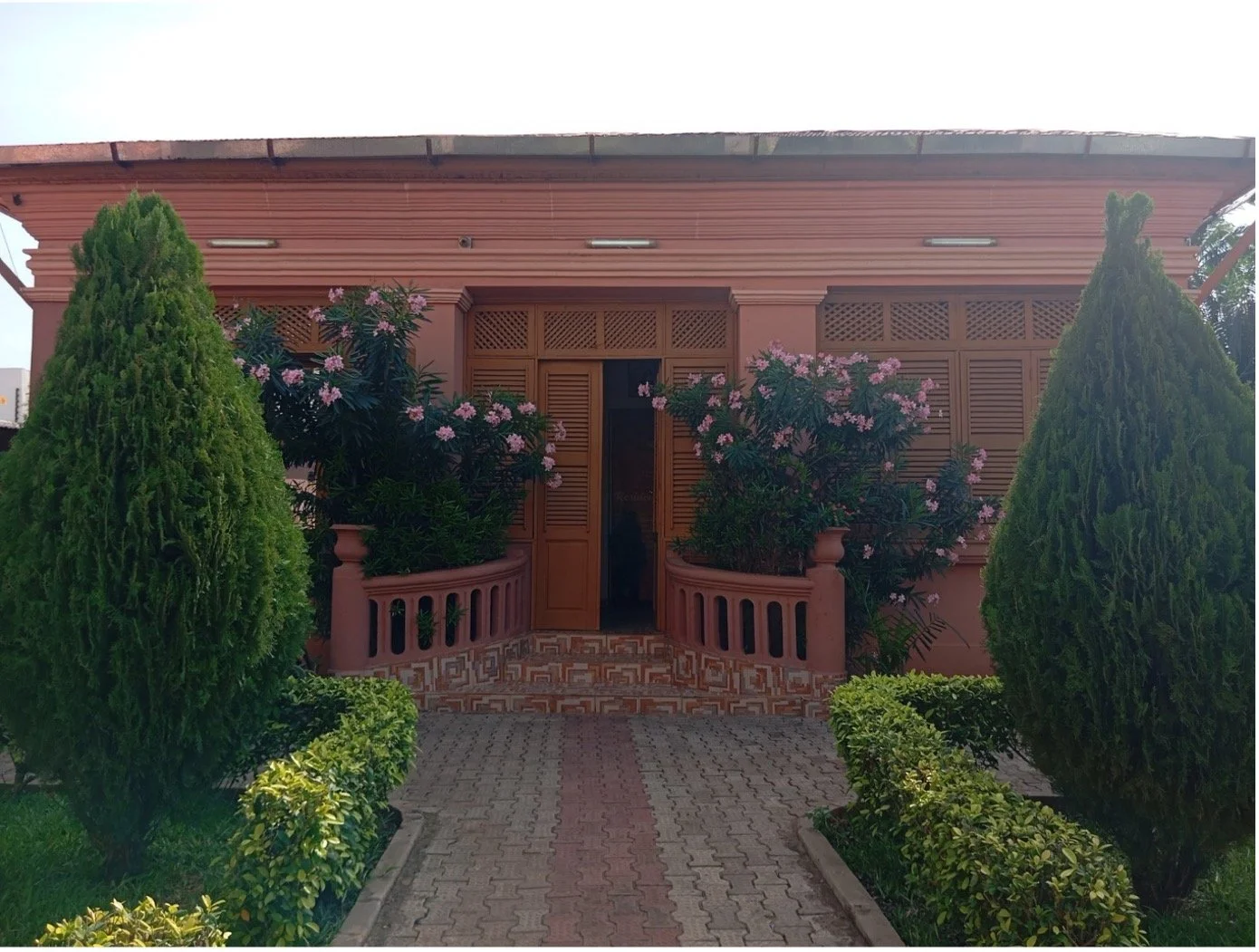
To add to that, some of the houses do not look ‘authentic’ anymore after having been rehabilitated. An example of such as house can be seen in figure 1 (before renovation) and 2 (after renovation). The façade of the house has been changed – especially the left window, staircase, the pillars, and the upper part. The adjustments have made the façade look rather symmetric, while this was not the case before the renovation. The construction techniques that have been used also differ from the nineteenth- and early twentieth-century techniques. The walls are thinner, a different type of wood has been used, and the roof is made of roof tiles instead of the corrugated sheets that were used before. According to the family who owns this house, they have not been consulted and have not had the right to interfere with the rehabilitation of the house. A wall has been constructed around the house, which is now a hotel, and the family lives on the other side of the wall in a small apartment. They have been emotionally and spatially detached from the only tangible heritage they had left from their ancestors, apart from family portraits. It is clear that the aim of this project is mainly to attract tourists. Also in this case, the knowledge and ideas of Beninese scholars and specialists have been ignored, and part of the historical value and authenticity of the house has been lost. This is a common practice in Southern Benin,[xiv] [xv] and is also one of the reasons why other families prefer to demolish their old house to construct a new house. Although some are aware of the loss of their heritage, they find this to be a better solution than to have their house rehabilitated and disowned by the government. In this unfortunate case, ownership and belonging are more important than preservation.
Figure 1. House before renovation. Photo taken by the family that owns the house, 2019.
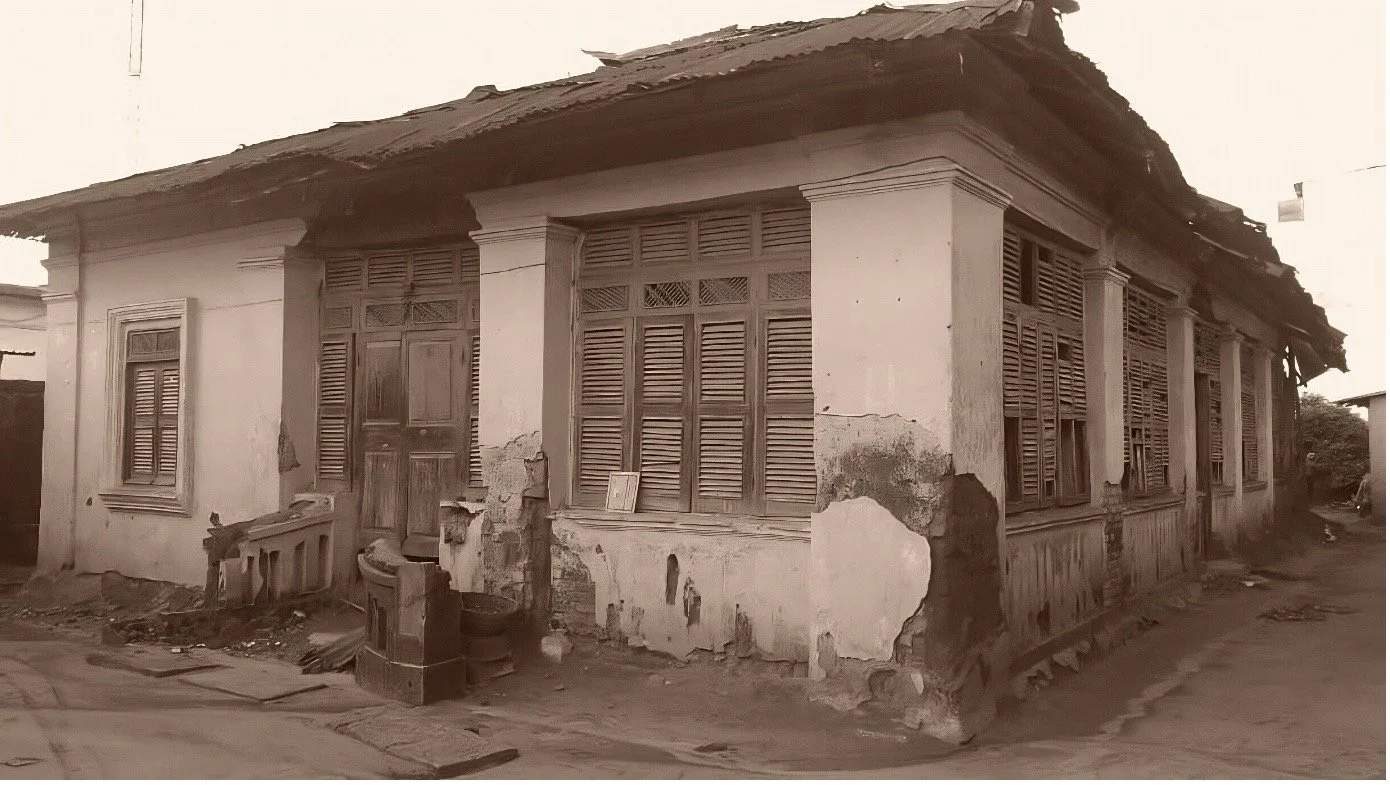
Figure 2. House after renovation. Photo taken by author, 2025.
Conclusion: Toward Ethical and Inclusive Cultural Politics
It is clear that the rehabilitation works and revalorization of the personal and public heritages of slavery has important economic and diplomatic benefits. Therefore, I strongly advise the Beninese government and the Ministry of Culture and Tourism to continue promoting and valorizing the material heritage of slavery. Nevertheless, it is crucial to revisit the cultural policies and take into account the opinions of the people who are concerned, in order to regenerate durable trust relations. Transparent contracts should be established before starting rehabilitation works. I also propose to create a heritage committee consisting of local scholars, who will have an advisory role and will contribute to the protection of authenticity and ownership. Ethical cultural politics is not only of great importance for the communities who inherit the slavery heritage, but also acts as cultural diplomacy and will contribute to the country’s growing popularity, without creating detachment.
* * *
Bibliography:
[i] Maureen Ogechi Aruomah; Neil Carr; Patrick Uche Okpoko, “Local people’s perceptions of the potential implications of cultural revitalisation through tourism in Benin, Nigeria,” Journal of Tourism and Cultural Change 18, No. 3 (2019): 1-15.
[ii] WorldData, “Tourism in Benin,” WorldData, 2025, https://www.worlddata.info/africa/benin/tourism.php.
[iii] Ana Lucia Araujo, Politics of Memory: Making Slavery Visible in the Public Space (New York: Routledge, 2012).
[iv] Araujo, Ana Lucia, Museums and Atlantic Slavery (New York: Routledge, 2021).
[v] Ana Lucia Araujo, Politics of Memory: Making Slavery Visible in the Public Space (New York: Routledge, 2012).
[vi] Stephan Conermann; Claudia Rauhut; Ulrike Schmieder; Michael Zeuske, Cultural Heritage and Slavery: Perspectives from Europe, (Berlin: De Gruyter, 2023).
[vii] Joseph S. Nye, Jr., “Soft power,” Foreign Policy 80 (1990): 153-171.
[viii] Joseph Nye, “Soft power: the origins and political progress of a concept,” Palgrave Communications 3 (2017): 1-3.
[ix] Ecofin Agency, “Benin to Invest $1.4bn to Double Tourism’s GDP Share by 2030,” Ecofin Agency, 2025, https://www.ecofinagency.com/news/1206-47236-benin-to-invest-1-4bn-to-double-tourism-s-gdp-share-by-2030#:~:text=Benin%20has%20approved%20a%20$1.4,visa%20services%20to%20simplify%20entry.
[x] Gaetano Ciarcia, “Mémoire de l’esclavage au Bénin. Le passé à venir, ” Gradhiva 8 (2008) : 4-9.
[xi] Eric Cohen, “Authenticity and Commoditization in Tourism,” Annals of Tourism Research 15 (1988): 371-386.
[xii] The Conversation, “Benin is building a theme park to remember slavery — is history up for sale?,” TheWorld, 2022, https://theworld.org/stories/2022/12/22/benin-building-theme-park-remember-slavery-history-sale.
[xiii] Agence Nationale de promotion des Patrimoines et de développement du Tourisme, La “Marina de Ouidah,” ANPT, 2022, https://anpt.bj/projet/9/la-marina-ouidah/.
[xiv] H. Killion Mokwete, “Aguda/Afro-Brazilian architectural heritage in the bight of Benin,” Regional Studies, Regional Science 12, No. 1 (2025): 924–942.
[xv] Dallen J. Timothy, Cultural Heritage and Tourism in Africa, (London: Routledge, 2003).
Figure 2. House after renovation. Photo taken by author, 2025.
Conclusion: Toward Ethical and Inclusive Cultural Politics
It is clear that the rehabilitation works and revalorization of the personal and public heritages of slavery has important economic and diplomatic benefits. Therefore, I strongly advise the Beninese government and the Ministry of Culture and Tourism to continue promoting and valorizing the material heritage of slavery. Nevertheless, it is crucial to revisit the cultural policies and take into account the opinions of the people who are concerned, in order to regenerate durable trust relations. Transparent contracts should be established before starting rehabilitation works. I also propose to create a heritage committee consisting of local scholars, who will have an advisory role and will contribute to the protection of authenticity and ownership. Ethical cultural politics is not only of great importance for the communities who inherit the slavery heritage, but also acts as cultural diplomacy and will contribute to the country’s growing popularity, without creating detachment.
Bibliography:
[i] Maureen Ogechi Aruomah; Neil Carr; Patrick Uche Okpoko, “Local people’s perceptions of the potential implications of cultural revitalisation through tourism in Benin, Nigeria,” Journal of Tourism and Cultural Change 18, No. 3 (2019): 1-15.
[ii] WorldData, “Tourism in Benin,” WorldData, 2025, https://www.worlddata.info/africa/benin/tourism.php.
[iii] Ana Lucia Araujo, Politics of Memory: Making Slavery Visible in the Public Space (New York: Routledge, 2012).
[iv] Araujo, Ana Lucia, Museums and Atlantic Slavery (New York: Routledge, 2021).
[v] Ana Lucia Araujo, Politics of Memory: Making Slavery Visible in the Public Space (New York: Routledge, 2012).
[vi] Stephan Conermann; Claudia Rauhut; Ulrike Schmieder; Michael Zeuske, Cultural Heritage and Slavery: Perspectives from Europe, (Berlin: De Gruyter, 2023).
[vii] Joseph S. Nye, Jr., “Soft power,” Foreign Policy 80 (1990): 153-171.
[viii] Joseph Nye, “Soft power: the origins and political progress of a concept,” Palgrave Communications 3 (2017): 1-3.
[ix] Ecofin Agency, “Benin to Invest $1.4bn to Double Tourism’s GDP Share by 2030,” Ecofin Agency, 2025, https://www.ecofinagency.com/news/1206-47236-benin-to-invest-1-4bn-to-double-tourism-s-gdp-share-by-2030#:~:text=Benin%20has%20approved%20a%20$1.4,visa%20services%20to%20simplify%20entry.
[x] Gaetano Ciarcia, “Mémoire de l’esclavage au Bénin. Le passé à venir, ” Gradhiva 8 (2008) : 4-9.
[xi] Eric Cohen, “Authenticity and Commoditization in Tourism,” Annals of Tourism Research 15 (1988): 371-386.
[xii] The Conversation, “Benin is building a theme park to remember slavery — is history up for sale?,” TheWorld, 2022, https://theworld.org/stories/2022/12/22/benin-building-theme-park-remember-slavery-history-sale.
[xiii] Agence Nationale de promotion des Patrimoines et de développement du Tourisme, La “Marina de Ouidah,” ANPT, 2022, https://anpt.bj/projet/9/la-marina-ouidah/.
[xiv] H. Killion Mokwete, “Aguda/Afro-Brazilian architectural heritage in the bight of Benin,” Regional Studies, Regional Science 12, No. 1 (2025): 924–942.
[xv] Dallen J. Timothy, Cultural Heritage and Tourism in Africa, (London: Routledge, 2003).
